

Brief History of Mongolia
Mongolia has a rich and complex history, marked by periods of great empire-building, foreign domination, and modern political evolution. Understanding Mongolia's historical and political development offers deep insights into its current national identity and geopolitical stance.
Ancient History and the Mongol Empire: Mongolia's early history is characterized by a series of nomadic tribes and confederations, such as the Xiongnu, Xianbei, Rouran, and Göktürks, who inhabited the vast steppes. These tribes often engaged in trade, conflict, and alliances with neighboring Chinese dynasties and other Central Asian cultures.
The most significant period in Mongolian history began with the rise of Genghis Khan (Chinggis Khaan) in the early 13th century. Genghis Khan unified the Mongol tribes and established the Mongol Empire, which became the largest contiguous empire in history. Under his leadership and that of his successors, the Mongol Empire expanded across Asia and into Europe, fostering trade, cultural exchange, and a period of relative stability known as the Pax Mongolica.
Yuan Dynasty and Decline: Genghis Khan's grandson, Kublai Khan, founded the Yuan Dynasty in China in 1271, establishing Beijing as the capital. The Yuan Dynasty ruled over China and much of Asia until it was overthrown by the Ming Dynasty in 1368. The decline of the Yuan marked the fragmentation of the Mongol Empire into smaller khanates and a period of internal strife and regional conflicts.

Manchu Rule and Independence: In the 17th century, Mongolia came under the control of the Qing Dynasty, established by the Manchus. This period lasted until the early 20th century, during which Mongolia was divided into Inner Mongolia (incorporated into China) and Outer Mongolia (more autonomous but still under Qing rule).
The collapse of the Qing Dynasty in 1911 allowed Outer Mongolia to declare independence. However, political instability and external pressures led to a complex and turbulent period.

Soviet Influence and the Mongolian People's Republic: In 1921, with the support of the Soviet Union, the Mongolian People's Revolutionary Party (MPRP) led a revolution that established the Mongolian People's Republic (MPR) in 1924. Mongolia became a satellite state of the Soviet Union, adopting a socialist system with a centrally planned economy. This period saw significant changes, including land collectivization, industrialization, and the suppression of religious and cultural practices.
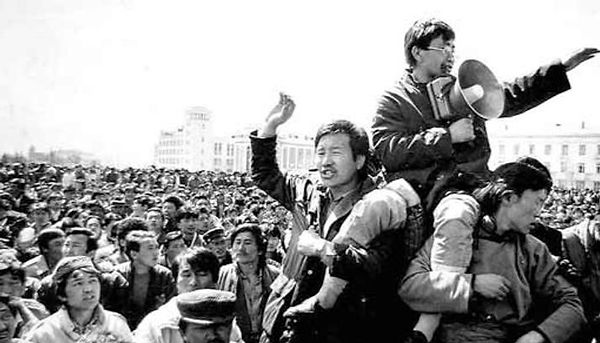
Democratic Revolution and Modern Politics: The democratic revolution of 1990 marked a significant turning point in Mongolian history. Protests and demands for political reform led to the resignation of the communist government and the establishment of a multi-party democratic system. The first democratic elections were held in 1992, and a new constitution was adopted, guaranteeing political freedoms and a market-based economy.
Modern Political Landscape: Today, Mongolia is a democratic republic with a semi-presidential system. The president, elected by popular vote, acts as the head of state, while the prime minister, appointed by the president and approved by the parliament, serves as the head of government. The Great Khural (parliament) is a unicameral legislative body responsible for making laws and overseeing the executive branch.
Mongolia's political landscape is characterized by a competitive multi-party system, with the Mongolian People's Party (MPP) and the Democratic Party (DP) being the two dominant political forces. Other smaller parties and coalitions also play significant roles in shaping the country's policies and governance.